Buying Electronics Abroad? Check This Before Using Them in Korea
An overseas electronic product is not compatible with Korea merely because its plug fits the wall socket. A travel adapter may solve the physical connection, but it cannot correct an unsupported voltage, missing mobile-network band, unavailable companion app, regional account restriction, or lack of local repair parts. Korea uses 220-volt, 60-hertz electricity and two-round-pin sockets. That information should be compared with the rating printed on the product or its power supply before the device is connected.
Electrical compatibility is only the first stage of the decision. A smartphone may turn on but have limited carrier support. A smart speaker may connect to Wi-Fi but reject a Korean account. A coffee machine may work through a transformer yet become uneconomical once shipping, replacement parts, and unavailable domestic service are included. The safest buying decision comes from reviewing the exact model rather than the product family. Regional variants sold under the same commercial name can use different power supplies, wireless hardware, firmware, accessories, and warranty policies.
Read the Input Label Before Looking at the Plug
The most useful information is usually printed in small text on the adapter, charger, or rear panel. Look for a line beginning with “Input.” A label such as “Input: 100-240V, 50/60Hz” indicates that the power supply is designed to accept a broad voltage and frequency range that includes Korea’s 220V, 60Hz system. Many laptop chargers, phone chargers, camera adapters, and other switching power supplies use this type of universal input. The plug or detachable cable may still need to be replaced, but a voltage transformer is generally unnecessary when the stated input range includes Korea’s supply.
A label showing “100V only,” “110V,” or “120V, 60Hz” requires a different response. The product was not designed to receive 220V directly. Connecting it through a simple plug adapter does not make it electrically compatible. Frequency must also be read rather than assumed. A product marked only for 50Hz may behave differently on Korea’s 60Hz supply, particularly when it contains a motor, pump, mechanical timer, transformer, or speed-sensitive audio component. The manufacturer should confirm compatibility when the label does not include 60Hz.
The risk becomes more significant with devices that create heat or draw substantial power. Hair dryers, kettles, mixers, coffee machines, heaters, rice cookers, and similar appliances place a much heavier load on adapters and transformers than a phone charger. A mismatch may become apparent through excessive heat, unusual noise, unstable operation, a burning smell, a damaged fuse, or failure of the power section. Do not rely on a marketplace description that says “international version” or “adapter included.” Ask the seller for a photograph of the actual rating label. The word “adapter” may refer only to a small piece that changes the plug shape.
A Plug Adapter and a Voltage Transformer Do Different Jobs
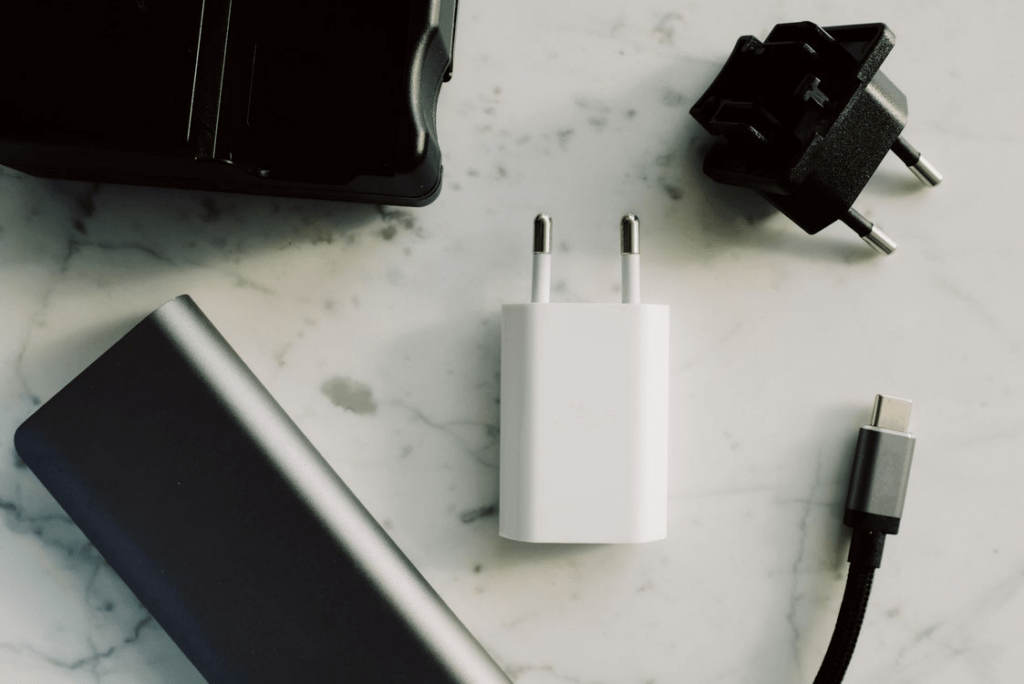
A plug adapter, often called a “돼지코” in Korea, changes the physical shape of the plug so that it can enter a Korean socket. It does not reduce 220V to 110V. A voltage transformer changes the supplied voltage. A step-down transformer may allow certain 110V products to receive a lower voltage from a 220V outlet, but it must be selected according to the product’s power consumption and operating characteristics.
The product’s wattage should be printed on its label or manual. The transformer must support more than the device’s normal demand, especially when a motor, compressor, or heating element produces a high startup or continuous load. Running a powerful appliance near the transformer’s maximum rating can generate considerable heat and shorten the life of both devices.
The plug adapter also needs an adequate current rating. A small travel adapter intended for chargers should not be assumed safe for a dryer, kettle, or heater simply because the plug fits. Loose contacts, poor construction, or an insufficient current rating can make the adapter a weak point in the electrical connection.
Korea’s KC electrical-product system is intended to reduce risks such as fire and electric shock. KTL explains that regulated products are managed through safety certification, safety confirmation, or supplier conformity confirmation according to their level of risk. Safety Korea provides a searchable database for certification information, including model names, product categories, certification status, and certificate numbers. This can help a buyer determine whether the same model or a Korean-market equivalent has been formally distributed domestically.
For high-wattage equipment, the domestic model is often the more practical purchase. A large transformer adds cost, weight, noise, heat, and another component that can fail. Refrigerators, washing machines, air conditioners, large kitchen appliances, and heating equipment are rarely attractive imports unless the manufacturer has explicitly approved Korean use and domestic installation support is available.
Wireless Compatibility Must Be Verified by Model Number
Wireless electronics have a second form of regional compatibility. Smartphones, tablets, watches, routers, laptops, smart-home hubs, security cameras, and Bluetooth devices must operate within Korea’s networks and technical environment.
For a smartphone, the exact regional model number matters more than the product name. A model sold in the United States or Japan may support a different combination of LTE and 5G bands from another version sold under the same name.
Partial band support can produce misleading results. The phone may show a signal and use mobile data outdoors while performing poorly indoors, in rural areas, or in buildings where the carrier relies on another frequency. Voice service may also depend on carrier support for VoLTE and the way the imported model is recognized by the network.
Before ordering, identify the complete model code and compare its supported bands with the requirements published by the intended Korean carrier. The review should also cover physical SIM support, eSIM activation, Wi-Fi calling, tethering, carrier aggregation, and software features that may depend on the sales region.
A seller’s claim that a phone is “unlocked” answers only one question. An unlocked device is not necessarily fully compatible with SK Telecom, KT, or LG U+. Network locking and radio compatibility are separate issues.
Routers and smart-home products can create similar problems. Wi-Fi channels and wireless settings differ across regulatory regions. Firmware configured for another country may hide Korean settings, use an unsuitable channel arrangement, or prevent the user from selecting Korea after installation.
Korea’s National Radio Research Agency administers conformity assessment for broadcasting and communications equipment, including wireless devices and products affected by electromagnetic interference.
For personal imports, the existence of an exemption does not prove that the product will communicate correctly with Korean networks. Legal entry, technical compatibility, and convenient everyday use are three different questions.
The App and Account Region Can Disable Important Features
A device can pass every electrical test and still lose the feature that made it worth buying. This is common with electronic readers, streaming boxes, smart speakers, robot vacuums, cameras, game consoles, health devices, and other products controlled through an account or mobile application.
Search the Korean Apple App Store or Google Play Store for the companion app before placing the order. Do not rely solely on a link shown on the foreign product page. An app available in the seller’s country may not appear for a Korean account.
The next issue is registration. Some products require a local phone number, foreign billing address, supported payment card, or account created in the original sales region. Others allow a Korean login but disable subscriptions, cloud storage, voice assistants, video services, or online stores.
Language support should be reviewed separately. A product page may advertise English menus while the setup app, support documentation, notifications, or firmware interface remains available only in the original market’s language.
Firmware support can be equally important. Confirm that the device can receive updates while connected from Korea and that changing the country setting does not disable previously advertised functions. An imported security camera or connected appliance that no longer receives patches may become difficult to maintain even if its hardware remains functional.
Game consoles and streaming devices require attention to both hardware and account regions. A console may run normally while its digital store, payment methods, streaming catalog, broadcast tuner, downloadable content, or subscription benefits differ from those available on a Korean model.
A useful pre-purchase test is to search the exact model number together with the app name, “Korea region,” “Korean account,” and “firmware update.” Reviews should be treated as supporting evidence rather than a substitute for the manufacturer’s current documentation.
An international brand name does not guarantee an international warranty. The Korean service center may distinguish between products sold by an authorized Korean distributor and units purchased through an overseas retailer.
The manufacturer may refuse domestic service, offer only paid repairs, request proof of import and purchase, or accept the device only when the same regional model is sold in Korea. Even when technicians are willing to inspect it, they may lack the appropriate circuit board, battery, panel, motor, or region-specific component.
The Korea Consumer Agency has documented overseas-purchase cases in which domestic service was unavailable. Its research has also found products for which only paid service was offered and others that could not be accepted domestically.
The most inconvenient problem is not always a major breakdown. Everyday accessories and consumable parts can be more difficult to replace. A missing charger, proprietary cable, battery, remote control, filter, brush, water tank, gasket, or mounting bracket may make an otherwise functional product unusable.
Before buying, search the exact model code on the Korean manufacturer site and contact the domestic service center. Ask whether it will accept that regional version, whether warranty service applies, what proof of purchase is required, and whether essential parts can be ordered.
Keep the invoice, payment record, model label, serial number, customs documents, and seller’s warranty terms. These records may be needed to establish the purchase date or determine whether any service is available.
When the product has already developed a fault, the cost of international return shipping should be weighed against domestic paid repair and the product’s remaining value. Choosing Between Repair and Return When an Overseas Manufacturer’s Warranty Does Not Apply Domestically provides a more focused framework for making that decision.
Personal Use and Resale Follow Different Rules
Bringing one device into Korea for personal use is not the same as importing products for sale. Buyers should decide the intended purpose before ordering, particularly when the product contains Wi-Fi, Bluetooth, mobile-network, or other radio functions.
Current official guidance states that broadcasting and communications equipment brought in for personal use may qualify for conformity-assessment exemption for one unit per product. A product imported under that personal-use exemption may be resold after at least one year has passed from its import-clearance date, provided the exemption and import date can be demonstrated. Other requirements, including customs rules, still need separate attention.
The relevant date is not simply the day the order was placed or delivered to a forwarding warehouse. The RRA identifies the Korean import-declaration acceptance date as the point used to determine whether one year has passed. Repeatedly importing unopened devices, ordering several identical units, or bringing products into Korea with an intention to resell them may fall outside the purpose of a personal-use exemption. A buyer planning commercial distribution should review certification, labeling, customs, tax, and product-safety obligations before importing.
The one-year rule should not be treated as permission to import inventory privately and sell it later. It addresses the resale of a product originally brought in for genuine personal use. The RRA notes that patterns suggesting continuous distribution of unopened goods may be monitored.
Safety requirements must also be distinguished from radio conformity rules. Depending on the product, electrical safety, electromagnetic compatibility, radio, battery, or other regulations may apply. The intended importer or seller should identify every applicable category rather than assuming one exemption covers the entire product.
The Real Price Appears After Compatibility Costs
The overseas sticker price should be compared with the complete cost of safe use in Korea.
Include international shipping, forwarding charges, customs duties where applicable, value-added tax, a suitable plug or cable, a correctly rated transformer, installation, and any accessory that must be replaced for Korean use. Add the expected cost of returning a defective item and the value of domestic service that is lost.
The Korea Consumer Agency advises buyers to include international shipping and applicable taxes when evaluating overseas prices and to verify domestic service before purchasing. Its market reviews have shown that an overseas listing is not always cheaper after the complete transaction cost is considered.
Risk should also be given a monetary value. A small saving may not justify uncertain carrier support on a primary phone or the absence of repair service for an expensive appliance. The same saving may be reasonable for a low-power accessory with universal input, standard cables, and no regional software dependence.
The strongest candidates for overseas purchase are usually products with clear 100-240V, 50/60Hz input, replaceable standard cables, confirmed Korean wireless support, an available companion app, and a service plan that remains acceptable even without a domestic warranty.
A product becomes a weak import candidate when it is limited to 110V, consumes substantial power, depends on a large transformer, uses market-specific radio hardware, requires a foreign account, or has proprietary consumables unavailable in Korea.
The final decision should be based on the exact model, not the size of the discount. Confirm the rating label, separate plug conversion from voltage conversion, verify wireless and regional services, investigate local parts and repairs, and determine whether the device is being imported for genuine personal use. A product that passes all of those checks is far more likely to remain useful after the excitement of the overseas purchase has passed.