Choosing Between Repair and Return When an Overseas Manufacturer’s Warranty Does Not Apply Domestically
A Korean service center’s refusal to honor an overseas warranty does not necessarily end every route to compensation. The manufacturer’s domestic warranty is only one possible source of assistance. Depending on how the product was purchased, the seller, purchasing agent, forwarding company, marketplace, card issuer, or domestic importer may still have a role.
The right response depends on three facts: who sold the product, when the defect appeared, and how much each available remedy will cost. A device that arrived damaged should not be treated in the same way as one that failed after a year of use. Likewise, returning a small accessory overseas involves a different calculation from shipping a monitor, coffee machine, or other large electronic product.
Before approving a paid repair or sending the item abroad, identify the transaction structure, preserve the evidence, and obtain written estimates for both options. Opening the product too soon may weaken a return claim, while delaying contact with the seller may allow an important claim period to expire.
The Purchase Route Determines Who Owes the Remedy
The term “overseas purchase” covers several different transactions. The responsible party changes according to the contract that was formed.
In a direct overseas purchase, the buyer places the order with a foreign retailer, which either ships directly to Korea or sends the item to a forwarding address. The sales contract is principally between the buyer and the foreign seller. The seller’s return policy, the marketplace’s buyer-protection rules, the payment provider’s dispute process, and the law governing that transaction become especially important.
A forwarding company normally handles transportation rather than selling the product. Korea’s Fair Trade Commission distinguishes forwarding services from purchasing services. In a forwarding arrangement, the consumer buys from the foreign seller and separately contracts with the forwarder to transport the parcel. The forwarder may be responsible for failures within its agreed inspection or shipping duties, but it is not automatically responsible for an internal manufacturing defect outside that inspection scope.
Purchasing-agency transactions require another distinction. In an agency arrangement, a Korean business may purchase the item overseas on the customer’s behalf. A shopping-mall-style purchasing agent may display selected foreign products and accept the customer’s order as part of its own sales process. The Fair Trade Commission created separate standard terms for forwarding, commissioned purchasing, and shopping-mall purchasing because the contractual relationships and responsibility differ among these models.
Parallel imports and products sold by a Korean reseller should not automatically be treated as foreign direct purchases. Even when the manufacturer refuses its official Korean warranty, the domestic seller may still owe obligations under its sales terms and applicable Korean consumer rules. The invoice should show whether the payment went to a foreign retailer, a Korean purchasing agent, or a domestic seller.
Begin by reviewing the order confirmation, seller identity, business registration information, marketplace receipt, payment statement, and the terms accepted at checkout. Contact the party that actually sold or arranged the product rather than relying only on the manufacturer’s service-center response.
An Arrival Defect Is Not the Same as a Later Breakdown
The timing and nature of the fault strongly affect the suitable remedy.
A product that arrives cracked, incomplete, unable to power on, or materially different from the listing presents an immediate delivery or conformity problem. The buyer should notify the seller promptly and request a return, replacement, or refund before considering an independent repair.
Do not continue using a visibly defective item merely to gather more evidence. Additional use can give the seller an opportunity to argue that the damage occurred after delivery. Photograph the parcel before discarding it, including the shipping label, outer box, internal protection, product condition, model number, and serial number. Record a short video when the defect involves power, display behavior, sound, controls, or missing functions.
A failure that develops after weeks or months of normal operation requires a different analysis. The seller’s warranty or marketplace claim period may still apply, but the case may also depend on whether the product can be repaired economically.
Korea’s Consumer Dispute Settlement Standards distinguish early defects from later faults for transactions to which those standards apply. Current official guidance states that an electronic product requiring an important repair because of a normal-use defect within ten days of purchase may qualify for replacement or a purchase-price refund. A comparable defect within one month may qualify for replacement or free repair. During the warranty period, an ordinary functional defect may lead to free repair, while an irreparable defect can support replacement or refund.
These standards are particularly relevant to disputes involving Korean sellers and service providers. They should not be presented as automatically binding a foreign retailer with no Korean commercial presence. Nevertheless, they provide a useful framework for distinguishing an initial defect, a repairable failure, and a fault serious enough to justify replacement or refund.
The buyer should describe the failure precisely. “The device is defective” provides less useful information than “the monitor began losing its image after twenty minutes of normal use, while the power indicator remained on, and the same fault occurred with two tested cables.”

A Return Quote Must Include Every Cost
An international return should be calculated as a complete transaction rather than reduced to the price of one shipping label.
The total may include domestic transport to the carrier, international postage, tracking, insurance, protective packaging, an overseas handling fee, a restocking deduction, currency-conversion loss, and the cost of sending a replacement back to Korea. Heavy or oversized electronics can produce a return cost large enough to erase the expected refund.
Ask the seller in writing who pays for each leg of transportation. A prepaid label is preferable, but it does not always cover collection fees, special packaging, insurance, or customs documentation. Confirm whether the seller will refund the original international shipping charge and whether it plans to deduct any inspection or restocking fee.
The reason for the return matters. Under Korean online-commerce rules applicable to domestic online sellers, a consumer generally bears return transportation for a change-of-mind cancellation. When the product differs from the advertisement or contract, the business bears the return cost. The same official guidance gives a general seven-day withdrawal period for ordinary online purchases and a longer route where the item differs from the advertised or agreed condition.
Those Korean rules do not automatically govern every direct transaction with a foreign merchant. A direct overseas buyer must review the seller’s own policy and the marketplace terms. A Korean purchasing-agent transaction may involve different protections depending on whether the agent acted as an intermediary or seller.
Taxes should also be included in the return calculation. Korea Customs Service provides a refund procedure for qualifying personal overseas purchases returned to the original seller. Its current guidance generally refers to goods returned in their imported condition within six months of import clearance. For items with an export-declaration value of KRW 2 million or less, alternative evidence such as the shipment document, seller’s return confirmation, and refund record may be accepted even where a formal export declaration was not filed.
Do not assume that duties or import taxes will be refunded automatically when the merchant issues the product refund. Keep the import declaration, customs-payment record, export or shipping evidence, seller authorization, tracking result, and refund receipt.
The product’s condition creates another constraint. Sellers may reject a return when accessories are missing, the serial number differs, protective films have been removed unnecessarily, or the product was opened by an unauthorized repair shop. Obtain written permission before sending the device for diagnosis when a return claim remains active.
Local Paid Repair Needs a Technical Feasibility Test
Domestic repair can be the better option after the return period has expired or when international shipping is disproportionately expensive. It should still be evaluated before the product is opened.
Contact both the brand’s Korean service center and reputable independent repair shops. Ask whether they accept the exact regional model, not merely the general product name. Two devices marketed under the same name may contain different boards, displays, batteries, wireless modules, power supplies, or connectors.
The repair center should confirm whether parts are available, whether the unit can be diagnosed without ordering parts first, and whether calibration or proprietary software is required. Ask whether the quote includes inspection, labor, parts, tax, return delivery, and a warranty on the repaired component.
Regional specifications can make a repair technically possible but economically unattractive. A Korean replacement board may not match a foreign power system, radio configuration, firmware region, or connector layout. A service center may agree to inspect the unit but later refuse the repair after confirming the model code.
The decision should be based on the product’s current replacement value, not its original overseas list price. A KRW 300,000 repair is difficult to justify when a newer Korean-market model with a domestic warranty costs KRW 420,000. The same repair may be reasonable for a rare product that is unavailable locally and would cost far more to replace.
Minor failures involving a standard cable, accessible port, fan, switch, or external power supply are often more predictable. Main-board failures, proprietary displays, water damage, structural damage, and sealed assemblies carry greater uncertainty. A low initial inspection quote may rise after disassembly reveals further damage.
Compatibility problems should not be mistaken for faults. Before paying for repair, review Buying Electronics Abroad? Check This Before Using Them in Korea. Incorrect voltage, unsupported frequency, a region-locked application, or incompatible network bands will not necessarily be corrected by replacing a damaged component.
Local repair becomes a sensible choice when the fault has been identified, the required part is obtainable, the technician accepts the regional model, the repair price is well below replacement cost, and the seller’s return route has already expired or costs more.
Evidence Should Be Collected Before the Product Is Opened
A strong claim shows what was purchased, what was promised, what failed, and how the buyer responded.
Keep the invoice, payment record, order page, original listing, seller’s description, warranty terms, model number, serial number, customs records, and delivery tracking. Save the product page as a PDF or screenshot because foreign listings can be changed or removed after the sale.
Photographs should show the parcel, packaging, product, labels, accessories, and visible damage. Videos should demonstrate the fault without editing that could hide the sequence of events. Include a clock or another device when the issue occurs only after a period of operation.
Maintain written communication whenever possible. Record when the seller was first contacted, what remedy was requested, and what response was received. Save the domestic manufacturer’s explanation that warranty service does not apply. Ask whether paid inspection or repair is available and obtain the refusal reason in writing where possible.
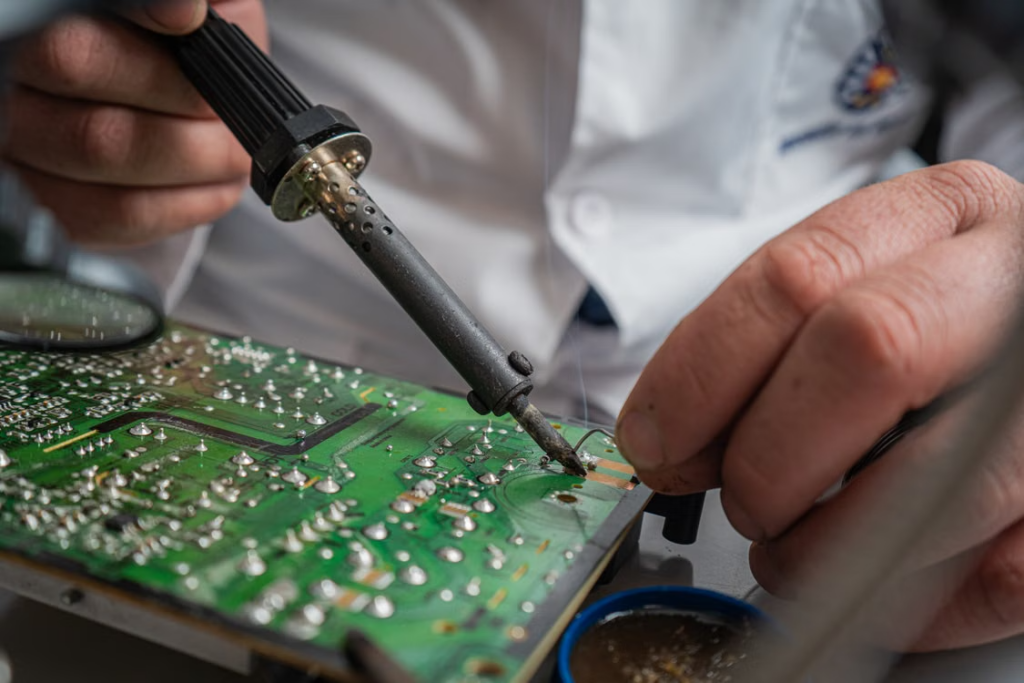
Do not disassemble the product, break a seal, replace a component, flash unofficial firmware, or authorize soldering until the seller confirms that this will not affect the claim. Even a well-intended repair attempt can make it difficult to establish whether the original defect or the later intervention caused the current condition.
If a diagnostic report is necessary, ask the technician to state the detected fault, likely cause, required parts, estimated cost, and whether there is evidence of impact, liquid exposure, electrical mismatch, or unauthorized modification.
This evidence also improves the financial comparison. A buyer can place the confirmed repair quote beside the documented return cost rather than relying on estimates or assumptions.
Formal Escalation After the Seller Refuses
The first complaint should clearly state the requested remedy. Identify the order, defect, date discovered, evidence attached, and whether you seek a refund, replacement, prepaid return, partial reimbursement, or repair contribution.
Give the seller a reasonable response deadline and keep the message factual. Repeated emotional messages often make the history harder for a marketplace or dispute reviewer to follow.
When the foreign seller does not resolve the issue, use the marketplace’s buyer-protection process before its filing period expires. Submit the listing, photographs, correspondence, delivery record, and any service-center report.
A card dispute may also be available depending on the payment method, card-network rules, reason for the claim, and filing deadline. Consumer24 advises consumers affected by overseas transaction problems to preserve supporting documents and consider requesting a chargeback through the card issuer. Contact the issuer promptly rather than waiting until every informal discussion has failed.
Korea’s International Consumer Portal provides information on overseas sellers’ cancellation and refund policies and routes for cross-border dispute assistance. Consumer24 also directs users toward consumer consultation procedures when direct negotiations are unsuccessful. The 1372 Consumer Counseling Center is another official starting point for domestic consumer consultation.
The purchase route remains important during escalation. A complaint against a foreign direct seller differs from a claim against a Korean shopping-mall purchasing agent, domestic parallel importer, or forwarding company. Identify the conduct attributed to each party instead of sending the same general complaint to everyone involved.
The final choice should follow a documented cost and responsibility analysis. Return is usually stronger for an item that arrived defective, remains within the applicable claim period, and can be sent back at the seller’s expense. Paid domestic repair becomes more attractive after return rights expire, provided the model is serviceable and the quote remains comfortably below replacement cost.
A warranty refusal is therefore not the decision itself. It is one piece of evidence showing that the manufacturer’s Korean branch will not supply free service. The buyer must still examine the seller’s duties, the transaction type, the time of failure, the complete return cost, the feasibility of local repair, and the formal remedies that remain available.